Search This Blog

Showing posts with label sugarpop's candy. Show all posts

Tuesday, March 31, 2015

Easter candy facts!

Easter is right around the corner! Do you have your easter baskets ready?

1.) Chocolate bunnies are a must have for any easter basket! Or maybe you prefer Peeps? More than 700 million Peeps, marshmallow bunnies, and marshmallow eggs are bought each easter season! This makes these tasty marshmallow treats the most popular non-chocolate item.


2.) 90 million chocolate bunnies are produced every year! Do you prefer milk or dark chocolate?

3.) Chocolate bunnies should be eaten ears first, according to 76% of Americans. Five percent said bunnies should be eaten feet first, while 4% favored eating the tail first.


4.) In 1953, it took 27 hours to create a marshmallow Peep. Now it takes about six minutes and about 5 million assorted Peeps are made each day in preparation for Easter.

5.) If we took all the Jellybeans that American's consume on Easter and lined them up end to end it would circle the earth nearly three times!
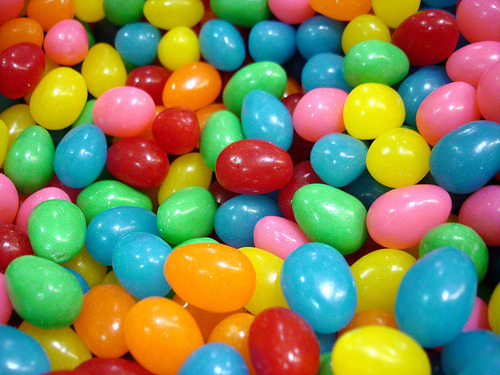
6.) What is your favorite Jellybean to eat on Easter? Children voted for their favorite jellybeans and the votes were: cherry (20%), strawberry (12%), grape (10%), lime (7%), and blueberry (6%).

7.) 70% of Easter candy bought is chocolate. 

8.) Easter is the second most popular candy holiday right after Halloween, beating out Valentines day by almost more than a billion dollars!


Candy isn't just for eating anymore! Try dyeing your easter eggs with some candy this year!

Now&Later's
-12 Now&Later candies (separate colors)
-2 cups of water
-1 tbsp of vinegar
Boil 2 cups of water with 1 tbsp of vinegar, add the Now&Laters and let simmer for 15 minutes. Strain into a mug or dish for dyeing.

Red Hots
-7 ounces of Red Hots (3/4 cups + 2 tablespoons)
-2 cups of water
-1 tbsp of vinegar
Boil 2 cups of water with 1 tbsp of vinegar, add the Red Hots and let simmer for 15 minutes. Strain into a mug or dish for dyeing

-SugarPop's Candy & Soda shop

248 N Main St, Mooresville, NC 28115
(704) 799-0959

Thursday, March 19, 2015

Strange candy from around the world

We have some pretty strange candy here at SugarPop's, like our bug candy or bacon soda but here are a few strange candies from around the world! Would you want to try any of these?


1.) Salsaghetti
Origin: Mexico
Salsaghetti is spicy watermelon straws that you top with a packet of tamarind sauce. Yum?


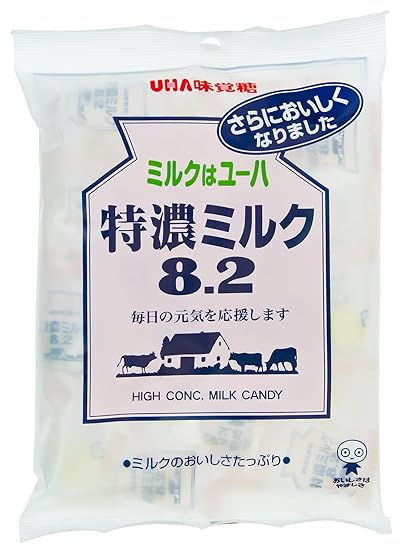
2.) High Concentrated Milk candy 
Origin: Japan 
This candy doesn't really need an explanation. It's simply candy that taste like milk. 

3.) Black and Gold Musk flavored sticks 
Origin: Australia 
Australia is home to a lot of different things, but what exactly does musk taste like? 
4.) Lemon Salt and Lemon pop rocks 
Origin: Spain 
If you like sour things this is probably the best thing for you! 

5.)Orion Kočiči Jazyčky
Origin: Czech Republic 
This one goes out to all you crazy cat ladies (and gentlemen)! Chocolate molded into the shape of kitten tongues. 

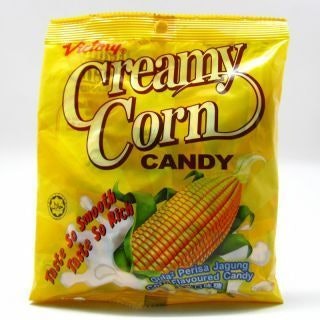
6.) Victory Creamy corn candy 
Origin: Malaysia

7.) Echizen Kurage candy
Origin: Japan 
This candy is made from the Echizen Kurage, a 6 foot 440 pound jelly fish! It comes in a combination flavor of jelly-fish and carmel. Savory and sweet? This candy was made to help fight the swarms of Echizen Kurage that were taking over the sea population. 

8.) Ika 
Origin: Japan 
The japanese seem to like infusing aquatic life into their candies. Ika is chocolate covered squid! 

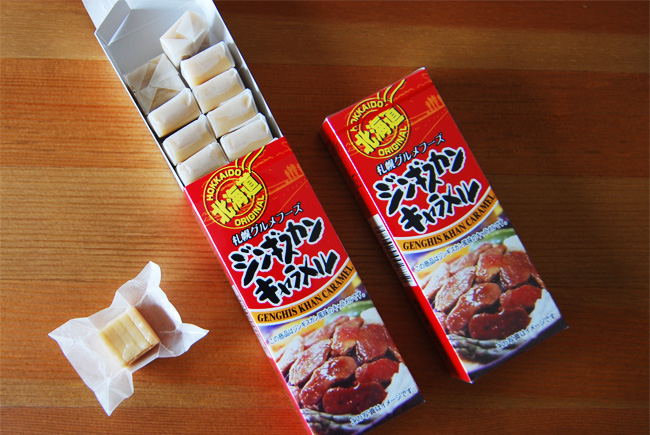
9.) Grilled Lamb Caramels 
Origin: Japan 
Yes, we know you probably just re-read the title of this candy. And yes, you did read it right. 

10.) Deviled egg candy
Origin: Japan 
I wonder if these taste like deviled eggs! 


-SugarPop's Candy and Soda Shop 
248 N. Main Street 
Mooresville, NC 


Thursday, March 5, 2015

Awesome Candies you will probably never eat again!

Sometimes the best things get discontinued for no reason. Have you ever tried any of these now discontinued or hard to find candies?


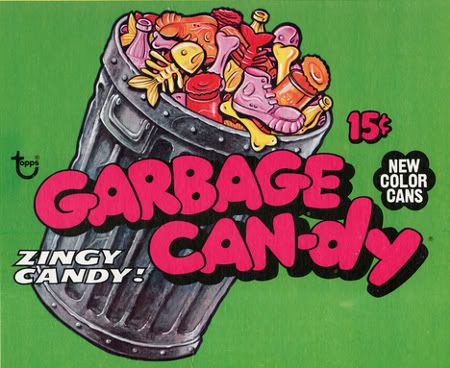
1.) Garbage Can-dy
These Garbage Can-dies were quirky and delicious! The package was shaped like little garbage cans and filled with Pez like candies shaped like things you would find in the trashcan; fish bones, shoes, dog toys, and a discarded soda bottle. Garbage Can-dy may be discontinued but we have something just as quirky for you: Sour Flush! Candy powder for dipping comes in a toilet shaped container with a plunger shaped sucker!

2.) BarNone
In 1986 Hershey tried to produce a gourmet chocolate bar before there were any gourmet chocolate bars! They tried combining aspects of all their best selling chocolate bars into one; peanuts, carmel, wafers and of course an over load of chocolate. In 1997 it was discontinued although some hope it will some day make a comeback.

3.) Chicken Dinner Bar 
Fortunately this candy didn't taste anything like chicken and was only a reference to Herbert Hoover's presidential campaign- "A chicken in every pot and a car in every garage." This candy was a chocolate covered nut roll that remained on shelves for almost 40 years before its original manufacturer was taken over by another. 


4.) Gator Gum 
This gum was introduced in the 1980's and was popular for only a short time and still has a whole legion of fans behind it. Gator gum was tart, to the point that some consumer's complained about it hurting their mouths. Unfortunately its shelf life was short lived, along with other drink companies trying to make gum flavors.  

5.) Tart n' Tiny 
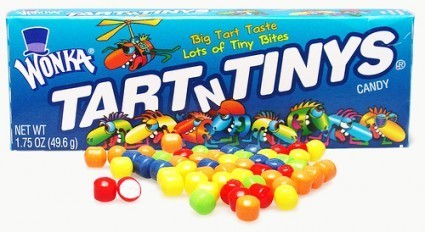
In 1980 Tart n' Tiny by Wonka was hugely popular and their best selling candy. But by 1990 they became discontinued all together. With some luck you can still find a box or two floating around on the internet for sale, but if you happen to get your hands on a box we don't suggest eating the candy. 

Thursday, February 19, 2015

Swedish Fish!


It's rare that a bag of candy leaves SugarPop's without at least one Swedish Fish nestled between various other candies! Swedish fish are hugely popular in the candy scene and for a good reason. Their delicious cherry-esque flavor and sweet aroma has captured many hearts throughout the years, dating back to the late 1950's.

Swedish Fish first arrived in the states around the late 1950's as an import from the Swedish confectionery company Malaco. While Swedish Fish is considered a gummy candy, it is very different from the usual gummies one is used to eating. Swedish Fish contains no gelatin and is actually a wine gum candy (it doesn't actually contain wine), that is where its denseness comes from and it makes it a wholly vegetarian candy! After its debut in the states it became fully accepted into the candy scene between the 1960-1970's.


There has been much debate over what a Swedish Fish "Original red" flavor actually is. It has a very aromatic cherry smell upon first opening up a jar or bag filled with these treats and the tastes can go from cherry to raspberry, fruit punch or even lingonberry! Not even the candy company who produces Swedish Fish can tell consumers what the actual flavor is because it is a special flavor specifically crafted for Swedish Fish. Cadbury currently owns and distributes Swedish Fish in the U.S and produce the original red flavor, green, yellow, orange, and purple. 7,000 metric tons of Swedish Fish are produced each year, that could approximate to 1,929 orca whales!

In Sweden you can find a Swedish Fish called salmaik which is a salty black licorice flavor that is hugely popular and can be found almost anywhere in Sweden. In 2009 Rita's Italian Ice company released a Swedish Fish flavor that was hugely popular in the United States!

-SugarPop's Candy
248 North Main St.
Mooresville, NC 28115(704) 799-0959

Tuesday, February 3, 2015

Nerds!


According to Laurnie Wilson, "Some say that [Nerds were] named after a reference in the Dr. Seuss Book, If I Ran the Zoo, where a 'nerd' is mentioned as one of the creatures the narrator would collect for his zoo." Nerds are crunchy, sour, sweet and bright! Kids love this box full of treats because of the bright colors and delicious flavors. They were launched in 1983 by Angelo Farggos of the Nestle candy company and by 1985 they were voted "Candy of the Year" by the National Candy Wholesalers Association.
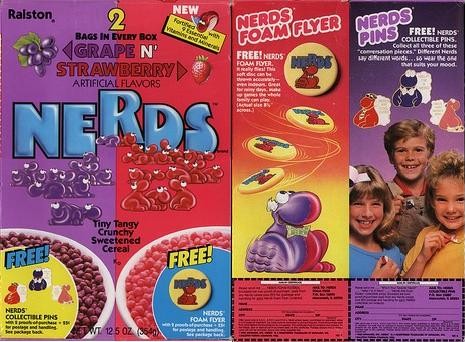
Nerds were very popular in the 1980s but had big competitors like Pop Rocks, Candy Buttons, and Mike and Ike's. They were generally, and still are today, sold in one box with two separate chambers to hold two different flavors of nerds. In the UK they once sold Nerds in a box with three separate chambers with a strawberry cola flavor that the United States never got to distribute. Nerds is a unique candy in its shape, size, and flavor but had a close cousin called Dweebs. Dweebs were slightly larger then an average Nerd, less sour, and were sold in three different flavors in one box; Dweebs only lasted a short time on the market. Nerds also tried to take off in the cereal market by creating a Nerd Cereal that came packaged just like the candy. Two separate cereal flavors in one box and it even came with a mail-in coupon to receive a nerds cereal bowl that you could separate your cereal into! Unfortunately, this cereal did not last long and is now discontinued.
This iconic candy comes in many flavors and forms! The most popular are the nerd boxes with these current flavors:

  • Strawberry and Grape (Pink and Purple)
  • Wild Cherry and Watermelon (orange or red and green)
  • Double Dipped Lemonade-Wild Cherry and Apple-Watermelon (red and yellow)
  • Sour-Lightning Lemon and Amped Apple (yellow and light green) 
  • Surf n' Turf- Totally Tropical Punch and Road Rash Raspberry (red and blue) 
  • Wildberry and Peach (blue and orange) 
  • Wildberry and Punch and Watermelon (Green and Blue) 
Nerds has also morphed into different and just as unique products such as:

  • Sour Nerds
  • Nerds Rope- The factory makes about 60 miles of Nerd Ropes each day! 
  • Rainbow Nerds
  • Jumbo Nerds
  • Nerds Gum ball 
  • Theme Nerds
  • Nerds Cereal 
  • Techno-nerds
  • Nerd Gum 
  • Dweebs 
  • Neon nerds- now only sold in Australia and New Zealand 
  • Nerd Jelly Beans
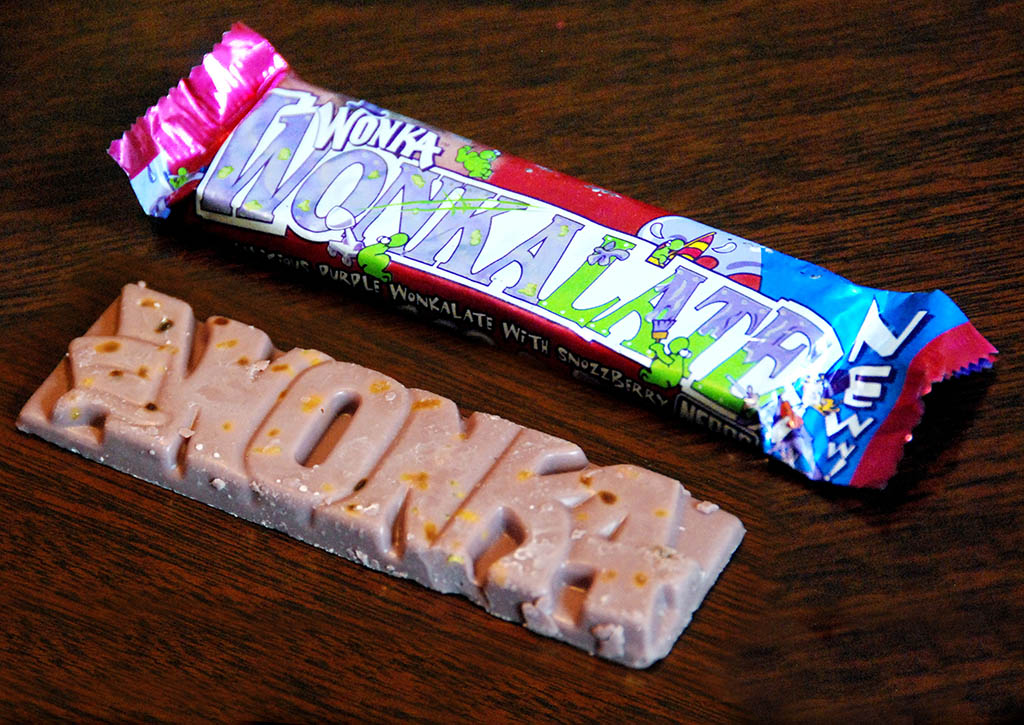
  • Wonkalate- A UK only chocolate bar that is purple in color and contains snozzberry flavored Nerds. 


See how Nerd Ropes are made! 

Wilson, Laurnie. "Candy Favorites – Wholesale Candy & Bulk Candy Suppliers Since 1927." A Nerd-tastic History. Candy Favorites, 1, Feb.2015.

SugarPop's Candy and Soda 
248 N. Main Street
Historic Downtown
Mooresville, Nc
28117
704-799-0959


Monday, January 26, 2015

Gummy candy!

Here at SugarPop's we don't mess around with our gummy candy! We have more then just your average gummy bears and worms, we have sharks, whales, army men, teeth, brains, chicken feet and much more! Gummy candy has a short and sweet history but it is one of the most popular candies today! 

The first gummy candy was invented by Hans Riegel when he invented the gummy bear during the 1920's. He owned the German candy company Haribo and went on the manufacture the first American gummy candy in 1982. In 1981, another German gummy candy manufacturer under the name of Trolli made the very first gummy worm, which soon became the most popular gummy candy ever made! 

Here is a brief history and some facts about other popular gummy candies!


Bottles
Bottles are sweets in the shape of classic Coca-Cola-style bottles with a cola flavor. They are produced by numerous companies. "Fizzy Blue Bottles", made by Lutti (formerly part of the French division of the Leaf Candy Company, now controlled by a private investment group), are sweets typically found in a pick and mix selection. They are very similar to cola bottle gummies in shape, but blue and pink colored and usually sour. "Blue Bottles", a variation from another company, have small rims around the sides, and are chewier and thicker, with a sweeter taste.

Rings
Ring-shaped gummy candy is often covered in sugar or sour powder. The most common and popular flavor is the peach ring, but other flavors include green apple, melon, blue raspberry, strawberry, and aniseed - although these are typically coated in chocolate. A commonly known producer of gummy rings is Trolli, for which the gummy rings are an important asset.


Red frogs
In Australia, jelly confectionery in the shape of frogs has been very popular since the 1930s. They are colored red or green, although they are usually referred to as "red frogs".


Road kill gummies
In February 2005, following complaints by the New Jersey Society for the Prevention of Cruelty to Animals, Kraft decided to stop production of the controversial Trolli U.S. Road Kill Gummies. The society complained that the products, shaped as partly flattened squirrels, chickens and snakes, would give children an incorrect message on the proper treatment of animals.


Teeth gummies
In Australia, jelly confectionery in the shape of teeth has been very popular since the 1930s. They are colored pink and white, with pink representing the gums and teeth being white. They have a slight minty flavor, similar to mint toothpaste.


How gummy candy is made

Monday, January 12, 2015

Chocolate truffles

Anyone who has been into SugarPop's knows about our chocolate truffle case. It is filled with beautifully decorated and rich chocolate truffles of all kinds! Any chocolate connoisseur is familiar with the different shapes, sizes, and taste of truffles, but did you know that size, shape, and filling helps differentiate between three very different types of truffles?

This rich and delicious treat is thought to be first created by N. Petrucelli in Chambéry, France in 1895. His truffles became popular with the public with the establishment of Prestat chocolate shop in London by Antoine Dufour in 1902. Today there are three main types of chocolate truffles: American, European, and Swiss:

The "American truffle" is a half-egg shaped chocolate-coated truffle, a mixture of dark or milk chocolates with butterfat and, in some cases, hardened coconut oil. Joseph Schmidt, a San Francisco chocolatier, and founder of Joseph Schmidt Confections, is credited with its creation in the mid-1980s.
"Sweet surrender", Los Angeles Times, February 8, 2006


The "European truffle" is made with syrup and a base made up of cocoa powder, milk powder, fats, and other such ingredients to create an oil-in-water type emulsion.


The "Swiss truffle" is made by combining melted chocolate into a boiling mixture of dairy cream and butter, which is poured into molds to set before sprinkling with cocoa powder. Like the French truffles, these have a very short shelf-life and must be consumed within a few days of making.
Chocolate, Cocoa, and Confectionery: Science and Technology by Bernard W. Minifie (1999), page 545.


Along with these three main types of truffles there are also various other kind of truffles: 

The "California truffle" is a larger, lumpier version of the French truffle, first made by Alice Medrich in 1973 after she tasted truffles in France. She sold these larger truffles in a charcuterie in the "Gourmet Ghetto" neighborhood of Berkeley, then in 1977 she began selling them in her own store, Cocolat, which soon expanded into a chain. The American craze for truffles started with Medrich

A Canadian variation of the American truffle, known as the Harvey truffle, includes the addition of graham cracker crumbs and peanut butter.

The "French truffle" is made with fresh cream and chocolate and then rolled into cocoa or nut powder

The "Belgian truffle" or praline is made with dark or milk chocolate filled with ganache, buttercream or nut pastes

"Chocolate Truffle." Wikipedia. Wikimedia Foundation, n.d. Web. 04 Jan. 2015

Here is a brief video on how chocolatier's hand make chocolate truffles! 

He

Saturday, December 27, 2014

Fairy floss or Cotton candy?


It comes in various colors, flavors, and sizes that no kid can resist; sticky and sweet cotton candy! Everyone has enjoyed this fluffy treat at least once in their lifetime whether it be at a carnival, circus, or at a fundraiser, but did you know this sugary treat was co-invented by a dentist?

Four men invented fairy floss, now it is called cotton candy, in 1899: Thomas Patton, Josef Delarose Lascaux, John C. Wharton, and William Morrison. They debuted their cotton candy at the St. Louis World’s Fair and sold 68,655 boxes of cotton candy for 25 cents a box! That totaled to $17,163.75, which comes out to $411, 243.45 in modern day payment, which is quite a bit of money for the 1900’s. Sugar used to cost about four cents a pound, so they were practically spinning gold!


About 50 years later in 1949, Gold Metal Products invented and launched a new type of cotton candy machine that was more dependable and easier to use. From that point on cotton candy became a staple at any fair, circus, fund raisers, etc..

-SugarPop's 
248 N. Main Street
Mooresville, NC
28117
(704)799-0959

Wednesday, November 19, 2014

Johnnie Ryan soda


Not only do we have a lot (tons actually) of candy but also we have a huge selection of glass-bottled soda! Here at SugarPop’s we defiantly have some sodas that have always been our customer’s favorites and one of them is Johnnie Ryan soda!
This delicious soda comes in a variety of classic flavors: Cream, Cola, Diet Cola, Root beer, Birch beer, Orange, Cherry and Ginger Ale.


 Johnnie Ryan soda has been around since 1935 and is sweetened with 100% pure cane sugar! It all started when three brothers, Walter, Stephen, and John Janik, started Keystone Water Company in their basement of their home located in Niagara Falls, NY. When Coke decided to abandon their multi-flavor line of soft drinks and focus only on Cola, the Janik brothers saw their opportunity. They realized that they already had all the ingredients to make soft drinks and started making a variety of flavors, that’s when they started up their new company; Extra Bottling Company. They called their new bottling and soft drink company Extra Bottling Company because instead of offering the standard seven-ounce bottle they offered ten-ounces so they could give customers more for their money.

Johnnie Ryan soda almost came to an end with a wave of closures for independent regional brands and consumers started to think there was only two types of soft drinks, Pepsi and Coke. Needless to say, the Johnnie Ryan soda weathered this consumer shift and is still making delicious and unique sodas today. The sleek and vintage looking logo and design of the bottle helps set its self apart from any other soda.

So next time you stop in, try out a delicious Johnny Ryan soda!

-SugarPop's soda and candy shop
248 N Main St.
Mooresville, NC 28115
704 499-0959

Tuesday, September 30, 2014

Salt water taffy!


Many people enjoy salt-water taffy, but it was created by accident! In 1883 David Bradley’s candy store was flooded by a major storm and his taffy got soaked in salty Atlantic Ocean water. When a young girl came into the store asking for taffy Bradley jokingly offered her his new “salt-water taffy” but the young girl loved it and the name stuck. It wasn’t until Joseph Franlinger boxed up the candy and sold it as an Atlantic City souvenir that it became popular. Enoch James was Franlinger’s first major competition because he perfected the recipe making it less sticky and easier to unwrap, sold the candy in bite size pieces and mechanized the pulling process for taffy.  Although the first salt water taffy was sold because it was soaked in salt water, there is no salt water in modern salt water taffy today.

Customers buying salt water taffy in Atlantic city

Taffy Puller


-SugarPop's Candy and Soda shop
248 N Main St Mooresville, NC 28115
(704) 746-3166