Search This Blog

Thursday, February 19, 2015

Swedish Fish!


It's rare that a bag of candy leaves SugarPop's without at least one Swedish Fish nestled between various other candies! Swedish fish are hugely popular in the candy scene and for a good reason. Their delicious cherry-esque flavor and sweet aroma has captured many hearts throughout the years, dating back to the late 1950's.

Swedish Fish first arrived in the states around the late 1950's as an import from the Swedish confectionery company Malaco. While Swedish Fish is considered a gummy candy, it is very different from the usual gummies one is used to eating. Swedish Fish contains no gelatin and is actually a wine gum candy (it doesn't actually contain wine), that is where its denseness comes from and it makes it a wholly vegetarian candy! After its debut in the states it became fully accepted into the candy scene between the 1960-1970's.


There has been much debate over what a Swedish Fish "Original red" flavor actually is. It has a very aromatic cherry smell upon first opening up a jar or bag filled with these treats and the tastes can go from cherry to raspberry, fruit punch or even lingonberry! Not even the candy company who produces Swedish Fish can tell consumers what the actual flavor is because it is a special flavor specifically crafted for Swedish Fish. Cadbury currently owns and distributes Swedish Fish in the U.S and produce the original red flavor, green, yellow, orange, and purple. 7,000 metric tons of Swedish Fish are produced each year, that could approximate to 1,929 orca whales!

In Sweden you can find a Swedish Fish called salmaik which is a salty black licorice flavor that is hugely popular and can be found almost anywhere in Sweden. In 2009 Rita's Italian Ice company released a Swedish Fish flavor that was hugely popular in the United States!

-SugarPop's Candy
248 North Main St.
Mooresville, NC 28115(704) 799-0959

Monday, February 9, 2015

Jaw Breaker


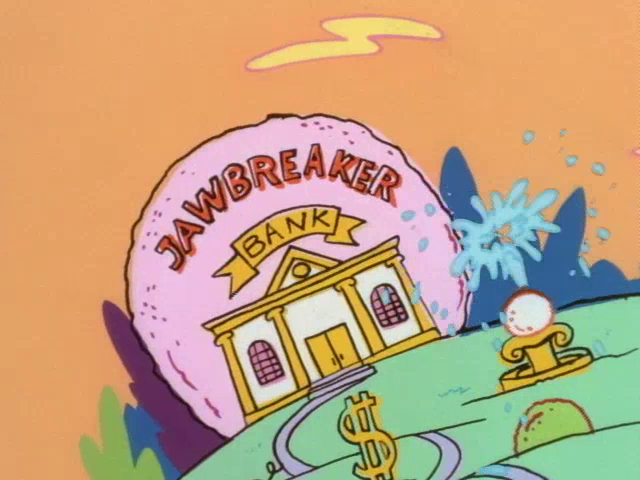
We have all had a jawbreaker in our lifetime and I think everyone can agree that a jawbreaker is a real commitment! Jawbreakers can range from the size of a small pebble to as big as a golf ball, some are hard all the way through and some have soft chewy centers. Here at SugarPop's we have brightly colored and marbled jawbreakers the size of golfballs and tiny jawbreaker that have a soft chewy center. 

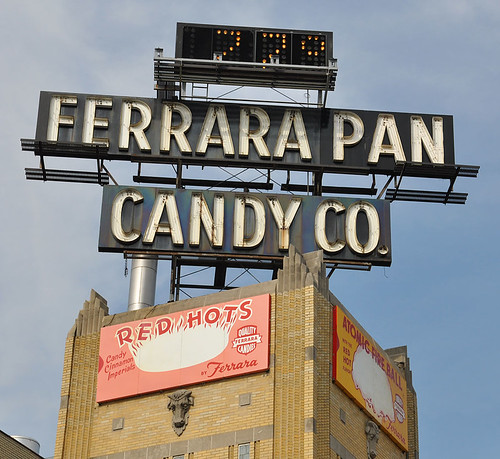
Jawbreakers, or gobstoppers, rose to popularity due to Ferrari Pan Candy Company in Forest Park, Illinois. The term gobstopper comes from British slang being that gob refers to ones mouth and jawbreaker refers to how hard the candy is and how it can cause a substantial amount of dental problems due to the high sugar count and if one where to chomp down onto the jawbreaker. These candies can take a few hours to dissolve or weeks depending on their size or how determined a purchaser is. Jawbreakers take about a week to manufacture due to the many layers of sugar and color that has to be added to get the giant size and flavor! 
Fun trivia: 
The cartoon Ed, Edd n Eddy,  featuring three adolescent boys, had many episodes centered around the three boys trying different schemes to obtain a jawbreaker and in 2003 they released an Ed, Edd n Eddy game called Jawbreakers that centers around you trying to obtain 100 different jawbreaker flavors! 

See how Jawbreakers are made! 


Tuesday, February 3, 2015

Nerds!


According to Laurnie Wilson, "Some say that [Nerds were] named after a reference in the Dr. Seuss Book, If I Ran the Zoo, where a 'nerd' is mentioned as one of the creatures the narrator would collect for his zoo." Nerds are crunchy, sour, sweet and bright! Kids love this box full of treats because of the bright colors and delicious flavors. They were launched in 1983 by Angelo Farggos of the Nestle candy company and by 1985 they were voted "Candy of the Year" by the National Candy Wholesalers Association.
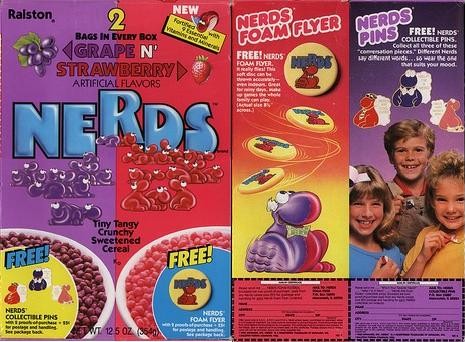
Nerds were very popular in the 1980s but had big competitors like Pop Rocks, Candy Buttons, and Mike and Ike's. They were generally, and still are today, sold in one box with two separate chambers to hold two different flavors of nerds. In the UK they once sold Nerds in a box with three separate chambers with a strawberry cola flavor that the United States never got to distribute. Nerds is a unique candy in its shape, size, and flavor but had a close cousin called Dweebs. Dweebs were slightly larger then an average Nerd, less sour, and were sold in three different flavors in one box; Dweebs only lasted a short time on the market. Nerds also tried to take off in the cereal market by creating a Nerd Cereal that came packaged just like the candy. Two separate cereal flavors in one box and it even came with a mail-in coupon to receive a nerds cereal bowl that you could separate your cereal into! Unfortunately, this cereal did not last long and is now discontinued.
This iconic candy comes in many flavors and forms! The most popular are the nerd boxes with these current flavors:

  • Strawberry and Grape (Pink and Purple)
  • Wild Cherry and Watermelon (orange or red and green)
  • Double Dipped Lemonade-Wild Cherry and Apple-Watermelon (red and yellow)
  • Sour-Lightning Lemon and Amped Apple (yellow and light green) 
  • Surf n' Turf- Totally Tropical Punch and Road Rash Raspberry (red and blue) 
  • Wildberry and Peach (blue and orange) 
  • Wildberry and Punch and Watermelon (Green and Blue) 
Nerds has also morphed into different and just as unique products such as:

  • Sour Nerds
  • Nerds Rope- The factory makes about 60 miles of Nerd Ropes each day! 
  • Rainbow Nerds
  • Jumbo Nerds
  • Nerds Gum ball 
  • Theme Nerds
  • Nerds Cereal 
  • Techno-nerds
  • Nerd Gum 
  • Dweebs 
  • Neon nerds- now only sold in Australia and New Zealand 
  • Nerd Jelly Beans
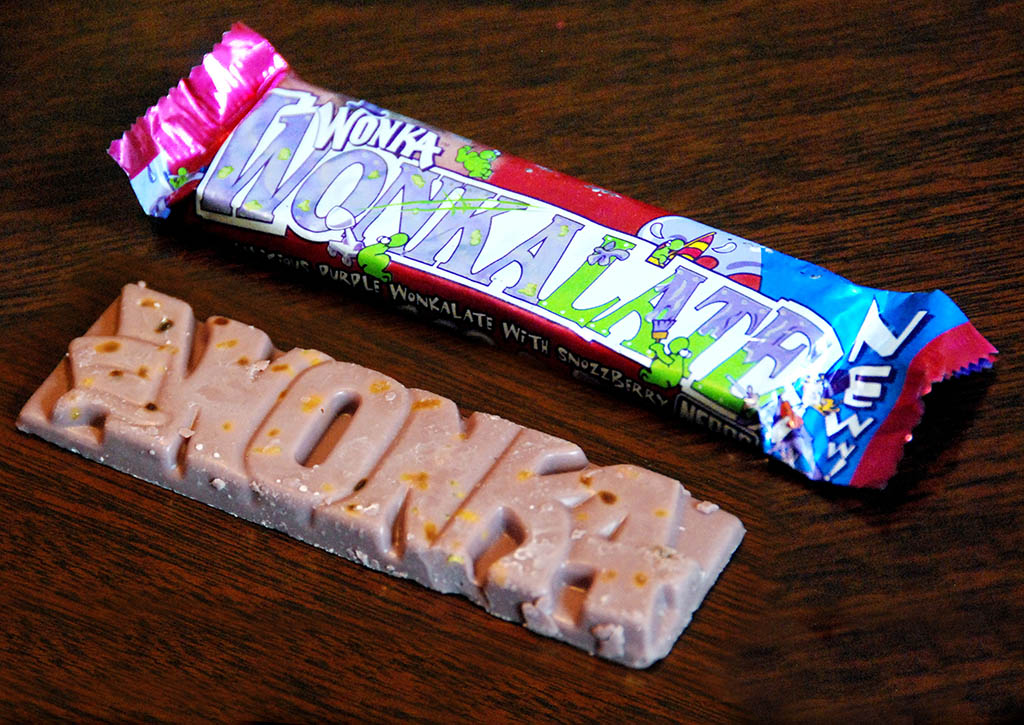
  • Wonkalate- A UK only chocolate bar that is purple in color and contains snozzberry flavored Nerds. 


See how Nerd Ropes are made! 

Wilson, Laurnie. "Candy Favorites – Wholesale Candy & Bulk Candy Suppliers Since 1927." A Nerd-tastic History. Candy Favorites, 1, Feb.2015.

SugarPop's Candy and Soda 
248 N. Main Street
Historic Downtown
Mooresville, Nc
28117
704-799-0959


Monday, January 26, 2015

Gummy candy!

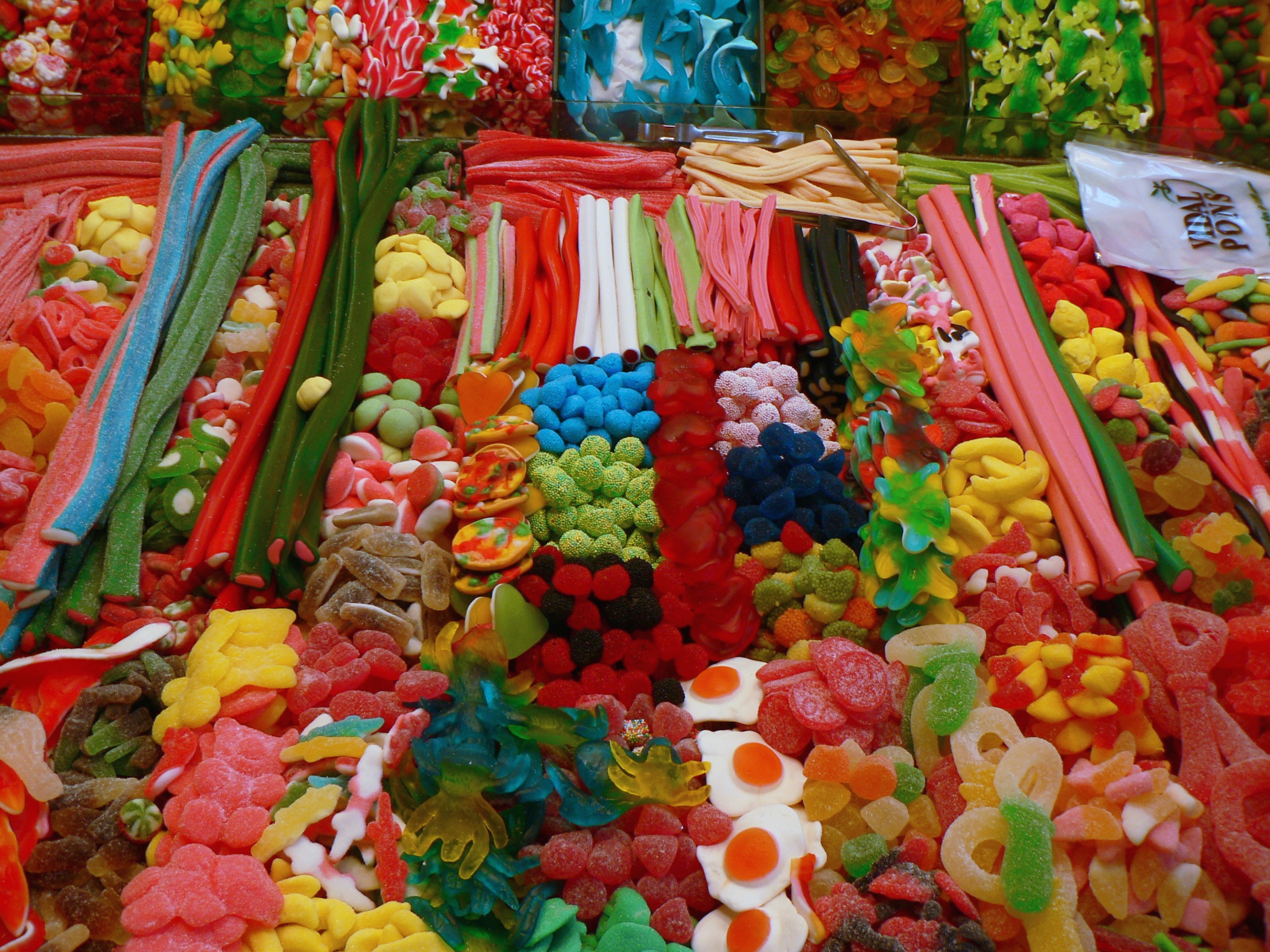
Here at SugarPop's we don't mess around with our gummy candy! We have more then just your average gummy bears and worms, we have sharks, whales, army men, teeth, brains, chicken feet and much more! Gummy candy has a short and sweet history but it is one of the most popular candies today! 

The first gummy candy was invented by Hans Riegel when he invented the gummy bear during the 1920's. He owned the German candy company Haribo and went on the manufacture the first American gummy candy in 1982. In 1981, another German gummy candy manufacturer under the name of Trolli made the very first gummy worm, which soon became the most popular gummy candy ever made! 

Here is a brief history and some facts about other popular gummy candies!


Bottles
Bottles are sweets in the shape of classic Coca-Cola-style bottles with a cola flavor. They are produced by numerous companies. "Fizzy Blue Bottles", made by Lutti (formerly part of the French division of the Leaf Candy Company, now controlled by a private investment group), are sweets typically found in a pick and mix selection. They are very similar to cola bottle gummies in shape, but blue and pink colored and usually sour. "Blue Bottles", a variation from another company, have small rims around the sides, and are chewier and thicker, with a sweeter taste.

Rings
Ring-shaped gummy candy is often covered in sugar or sour powder. The most common and popular flavor is the peach ring, but other flavors include green apple, melon, blue raspberry, strawberry, and aniseed - although these are typically coated in chocolate. A commonly known producer of gummy rings is Trolli, for which the gummy rings are an important asset.


Red frogs
In Australia, jelly confectionery in the shape of frogs has been very popular since the 1930s. They are colored red or green, although they are usually referred to as "red frogs".


Road kill gummies
In February 2005, following complaints by the New Jersey Society for the Prevention of Cruelty to Animals, Kraft decided to stop production of the controversial Trolli U.S. Road Kill Gummies. The society complained that the products, shaped as partly flattened squirrels, chickens and snakes, would give children an incorrect message on the proper treatment of animals.


Teeth gummies
In Australia, jelly confectionery in the shape of teeth has been very popular since the 1930s. They are colored pink and white, with pink representing the gums and teeth being white. They have a slight minty flavor, similar to mint toothpaste.


How gummy candy is made

Monday, January 19, 2015

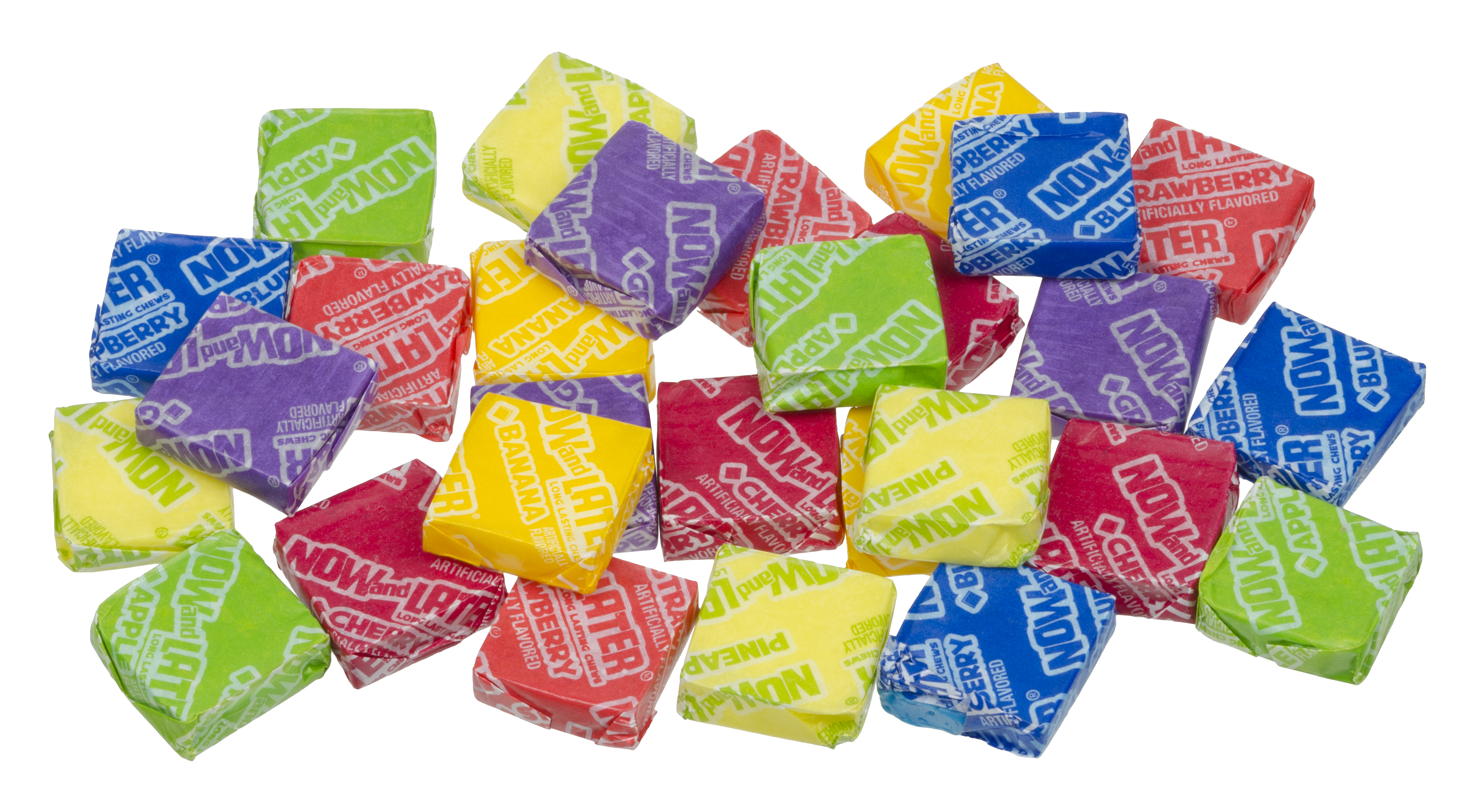
Now and Later fun facts!

Now and Later Fun facts!

  • Although the most common flavors you see are the Cherry, Watermelon, Strawberry, and Grape  there are actually twelve flavors in production. 
  • The production of Now and Later's can date back to around 1862
  • The slogan "Hard 'N Fruity Now and Soft 'N Chewy Later" found on each square's wrapping, replaced the original "Eat Some Now, Kid."
  • It is was a ten-cent candy bar of nine beige-colored squares
  • It was originally produced by a woman- Josephine Klein 
  • Now and Later was named after the fact that consumers could enjoy most of the candy "now" and still have some for later! 
Here is a list of all the Now and Later candy flavors ever produced. Would you want to try all of these?

Monday, January 12, 2015

Chocolate truffles

Anyone who has been into SugarPop's knows about our chocolate truffle case. It is filled with beautifully decorated and rich chocolate truffles of all kinds! Any chocolate connoisseur is familiar with the different shapes, sizes, and taste of truffles, but did you know that size, shape, and filling helps differentiate between three very different types of truffles?

This rich and delicious treat is thought to be first created by N. Petrucelli in Chambéry, France in 1895. His truffles became popular with the public with the establishment of Prestat chocolate shop in London by Antoine Dufour in 1902. Today there are three main types of chocolate truffles: American, European, and Swiss:

The "American truffle" is a half-egg shaped chocolate-coated truffle, a mixture of dark or milk chocolates with butterfat and, in some cases, hardened coconut oil. Joseph Schmidt, a San Francisco chocolatier, and founder of Joseph Schmidt Confections, is credited with its creation in the mid-1980s.
"Sweet surrender", Los Angeles Times, February 8, 2006


The "European truffle" is made with syrup and a base made up of cocoa powder, milk powder, fats, and other such ingredients to create an oil-in-water type emulsion.


The "Swiss truffle" is made by combining melted chocolate into a boiling mixture of dairy cream and butter, which is poured into molds to set before sprinkling with cocoa powder. Like the French truffles, these have a very short shelf-life and must be consumed within a few days of making.
Chocolate, Cocoa, and Confectionery: Science and Technology by Bernard W. Minifie (1999), page 545.


Along with these three main types of truffles there are also various other kind of truffles: 

The "California truffle" is a larger, lumpier version of the French truffle, first made by Alice Medrich in 1973 after she tasted truffles in France. She sold these larger truffles in a charcuterie in the "Gourmet Ghetto" neighborhood of Berkeley, then in 1977 she began selling them in her own store, Cocolat, which soon expanded into a chain. The American craze for truffles started with Medrich

A Canadian variation of the American truffle, known as the Harvey truffle, includes the addition of graham cracker crumbs and peanut butter.

The "French truffle" is made with fresh cream and chocolate and then rolled into cocoa or nut powder

The "Belgian truffle" or praline is made with dark or milk chocolate filled with ganache, buttercream or nut pastes

"Chocolate Truffle." Wikipedia. Wikimedia Foundation, n.d. Web. 04 Jan. 2015

Here is a brief video on how chocolatier's hand make chocolate truffles! 

He

Monday, January 5, 2015

Blow Pops!

Blow pop's have been around for a long time and almost everyone is familiar with this fruity lollipop with a bubble gum center! This candy comes in many flavors such as; watermelon, cherry, grape, strawberry, sour apple, lemonade, orange, tangerine-mango, black cherry, blue raspberry, cherry ice and kiwi-strawberry. Originally they were called "Triple Treat" by their original manufacturer  Triple T Candy Company in 1969 and in 1973 they were re-branded under the name "Charms Blow Pop".

Walter W. Reid Jr. founded the Tropical Charms candy company in Bloomfield, New Jersey in 1912 in reference to the square shaped hard candy they sold, but shortened the name to Charms. Blow Pops are nut-free, peanut-free, gluten-free and during World War II the U.S Army included Charms's candies in combat rations as a supplement; the tradition has continued only with a few interruptions.

Lucille LaCapra is shown performing a quality-control weight check on candy manufactured by the Charms Candy Co. of Bloomfield in a photo from the late 1960s.

Walter Reid III, the son of the founder, took control of the company and soon made it the leading producer of hard candy in the world. When they invented the Charms Blow Pop, it was the first ever gum filled lollipop in the world.

In 1988 the Charms candy company was sold to the Tootsie Roll company where they then produced the Tootsie Pop and became the largest lollipop manufacturer in the world.